Education
Witness’s: Correct Possessive Form, Grammar Rules, Examples, and Common Mistakes


Possessive forms are one of the most frequently misunderstood areas of English grammar, especially when a singular noun already ends in the letter s. A common example is the word witness, which often leaves writers wondering whether the correct possessive form is witness’s or witness’. This question appears regularly in classrooms, workplaces, legal documents, academic writing, and online searches because different style guides sometimes recommend different punctuation conventions. Understanding when to use witness’s, why it is considered correct in most forms of modern English, and how it differs from witnesses or witness can greatly improve your writing. Whether you are preparing legal documents, writing essays, creating blog posts, or simply improving your grammar, learning the correct possessive form ensures your writing is clear, professional, and grammatically accurate.
What Does “Witness’s” Mean?
Witness’s is the singular possessive form of the noun witness. It indicates that something belongs to, relates to, or is associated with one witness.
For example:
- The witness’s testimony changed the outcome of the trial.
- The witness’s statement was carefully reviewed.
- Everyone listened closely to the witness’s account of the accident.
In each sentence, something belongs to or is connected with one witness. The apostrophe followed by s shows possession.
Is “Witness’s” Grammatically Correct?
Yes. Witness’s is grammatically correct and is the preferred singular possessive form in most major style guides, including The Chicago Manual of Style, MLA, and many modern grammar references.
The standard rule is simple:
To make most singular nouns possessive, add ‘s, even if the noun already ends with the letter s.
Examples include:
- James → James’s book
- Boss → Boss’s office
- Class → Class’s schedule
- Witness → Witness’s testimony
This rule makes pronunciation and meaning clear while maintaining consistency across English grammar.
What About “Witness'”?
You may occasionally see witness’ used as the possessive form, particularly in publications that follow AP Style or certain newspaper style guides. AP Style often omits the extra s after singular proper nouns ending in s, although its guidance varies depending on the specific word.
However, for most academic writing, business communication, books, essays, websites, and everyday English, witness’s is generally the recommended form.
When writing for a specific organization or publication, always follow its required style guide.
Witness, Witnesses, Witness’s, and Witnesses’: Understanding the Difference
Many writers confuse these four forms because they look similar but serve different grammatical purposes.
Witness is the singular noun referring to one person who sees an event or provides testimony.
Witnesses is the plural form, referring to more than one witness.
Witness’s is the singular possessive form, showing that something belongs to one witness.
Witnesses’ is the plural possessive form, indicating that something belongs to multiple witnesses.
Examples:
- The witness arrived early.
- Several witnesses testified.
- The witness’s statement was accurate.
- The witnesses’ accounts supported one another.
Recognizing these distinctions makes sentence construction much easier.
Examples of Correct Usage
Studying examples is one of the best ways to master possessive grammar.
The witness’s testimony convinced the jury.
The lawyer carefully examined the witness’s written statement.
Police confirmed the witness’s description of the suspect.
Everyone appreciated the witness’s honesty during the investigation.
The judge considered the witness’s credibility before making a decision.
Each sentence demonstrates the correct singular possessive form.
Common Mistakes Writers Make
One of the most common mistakes is omitting the apostrophe entirely, writing witnesss or witnesses when possession is intended.
Another frequent error is confusing plural and possessive forms. Writers sometimes use witnesses when they actually mean witness’s, changing the meaning of the sentence.
Some writers also avoid possessive constructions altogether because they are uncertain about apostrophe placement. While this may prevent errors, understanding the grammar allows for clearer and more natural writing.
Finally, many people believe that every word ending in s should receive only an apostrophe. Although some style guides allow this in limited situations, modern English generally recommends adding ‘s to singular nouns.
Why Correct Possessive Grammar Matters
Correct punctuation improves readability and professionalism. Whether you are writing legal documents, academic essays, business reports, or online articles, accurate possessive forms help readers understand ownership and relationships between nouns.
Grammar mistakes involving apostrophes can distract readers and sometimes even change the meaning of a sentence. Using witness’s correctly demonstrates attention to detail and strengthens your credibility as a writer.
For content creators and website owners, accurate grammar also supports search engine optimization because high-quality, trustworthy content is more likely to satisfy readers and perform well in search results.
Tips for Remembering the Correct Form
A simple rule can help you remember:
If there is one witness, use witness’s.
If there are many witnesses who own something together, use witnesses’.
If you simply mean more than one witness without showing possession, use witnesses.
Reading your sentence aloud can also help. If you naturally pronounce an extra “iz” sound after the word, witness’s is usually the correct form.
Conclusion
The possessive form witness’s follows the standard English grammar rule of adding ‘s to singular nouns, even when they already end in s. Although you may occasionally encounter witness’ in publications following specific style guides, witness’s remains the preferred choice for most academic, professional, and everyday writing. Understanding the difference between witness, witnesses, witness’s, and witnesses’ helps eliminate confusion and improves both clarity and grammatical accuracy. By practicing these rules and reviewing real-world examples, you can confidently use the correct possessive form in any writing situation.
Frequently Asked Questions (FAQs)
1. Is witness’s grammatically correct?
Yes. Witness’s is the standard singular possessive form in modern English.
2. What does witness’s mean?
It indicates that something belongs to or is associated with one witness.
3. Is witness’ also correct?
Some style guides, such as AP Style, may allow witness’ in certain contexts. However, witness’s is generally preferred in most writing.
4. What is the plural of witness?
The plural form is witnesses.
5. What is the plural possessive form of witness?
The plural possessive form is witnesses’, indicating ownership by multiple witnesses.
6. Why is witness’s written with an apostrophe and s?
Because the standard grammar rule forms the possessive of most singular nouns by adding ‘s, even when the noun ends with s.
7. How can I remember the correct possessive form?
Remember: one witness = witness’s, multiple witnesses = witnesses, and ownership by multiple witnesses = witnesses’.
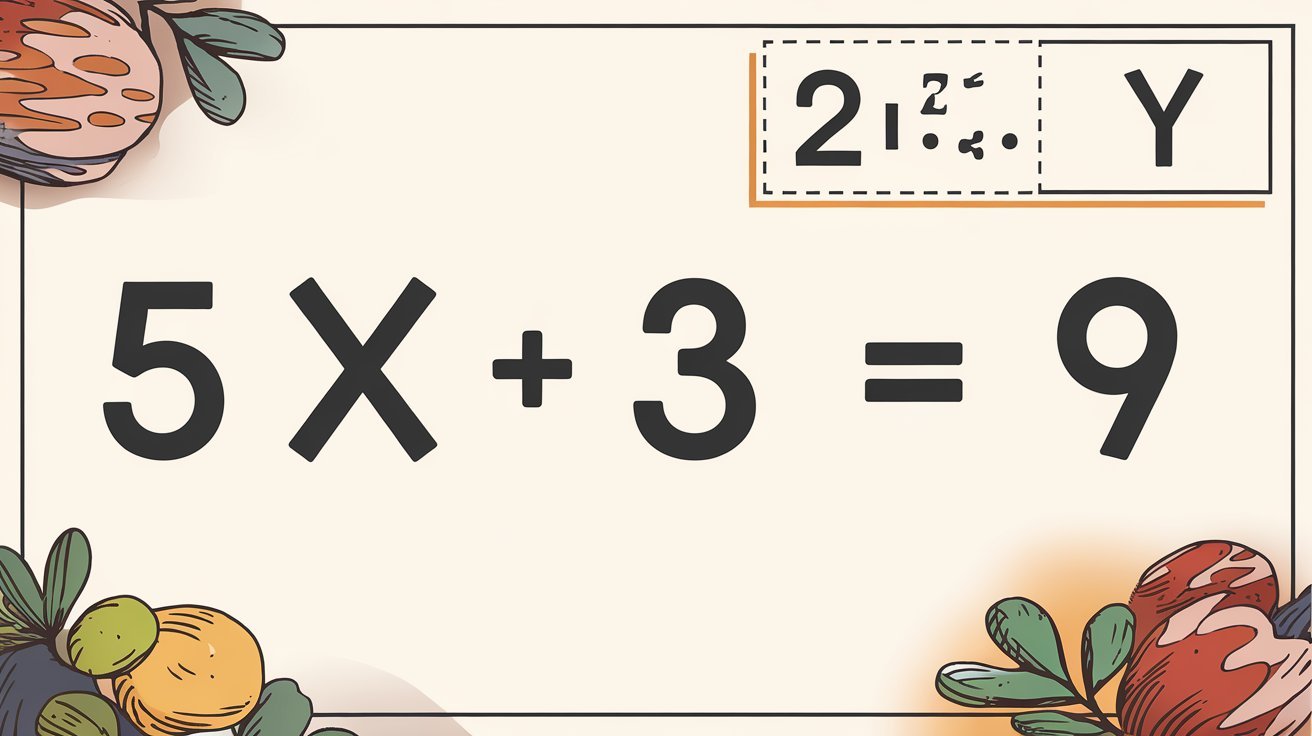
Tang Math Equato answers is a search phrase commonly associated with students looking for help with Tang Math equations, math problems, and answer-checking. When a difficult problem appears on a math practice platform, the most useful approach is not simply to copy an answer. We learn much more when we understand the calculation, identify the mathematical rule involved, and use the final answer to check our own work.
Tang Math activities can involve arithmetic, equations, number relationships, multiplication, division, fractions, decimals, and other mathematical skills. Because individual questions can vary, there is no single universal list of “Tang Math Equato answers.” The correct answer depends on the exact problem displayed.
For students searching for Tang Math answers, understanding how to solve common problem types can make these activities considerably easier. A systematic approach also reduces mistakes and helps us become more confident with mathematics.
What Does Tang Math Equato Answers Mean?
The phrase “Tang Math Equato answers” appears to be a variation or shortened search term referring to answers for equations or activities associated with Tang Math. Searchers may use different spellings when looking for help with a particular math question.
An equation is a mathematical statement showing that two expressions have the same value. For example, in a simple equation such as x + 5 = 12, we need to determine the value of x. We can subtract 5 from both sides, giving x = 7.
The important principle is that an equation behaves like a balanced relationship. Whatever operation we perform on one side should also be performed on the other side. This idea provides the foundation for solving increasingly complicated equations.
When a Tang Math question asks for an answer, we should first identify what information is provided, determine what operation or rule is required, solve the problem carefully, and then check whether the result makes sense.
How to Solve Tang Math Equations Step by Step
The best way to approach Tang Math equation answers is to follow a consistent process. First, read the entire question carefully instead of immediately calculating. Determine whether the problem involves addition, subtraction, multiplication, division, fractions, decimals, or an unknown variable.
For a basic equation such as x + 8 = 15, we isolate x by subtracting 8 from both sides:
x + 8 = 15
x = 15 − 8
x = 7
We can verify the answer by substituting 7 back into the original equation:
7 + 8 = 15
Since the statement is correct, the solution is verified.
For multiplication equations, the inverse operation is division. For example:
4x = 28
Divide both sides by 4:
x = 28 ÷ 4
x = 7
This inverse-operation strategy is one of the most important techniques for solving elementary equations.
Common Types of Tang Math Problems
Students searching for Tang Math answers may encounter many different question formats. Arithmetic problems are among the most straightforward. These require us to perform operations accurately while following the correct order of operations when several operations appear together.
Fractions can be more challenging. When adding fractions with the same denominator, we add the numerators while keeping the denominator unchanged. For example:
2/7 + 3/7 = 5/7
When denominators differ, we generally need a common denominator before adding or subtracting.
Decimal questions require careful attention to place value. When adding or subtracting decimals, lining up the decimal points helps prevent errors.
Word problems require an additional step because we must translate written information into a mathematical expression or equation. Keywords can provide clues, but we should focus on the actual relationship described by the problem rather than relying mechanically on individual words.
How to Check Tang Math Answers
Finding a possible answer is only part of solving a mathematical problem. Checking the answer helps us identify calculation errors before submitting our work.
For equations, substitution is one of the simplest checking methods. If we solve:
x − 6 = 10
we obtain:
x = 16
Substituting 16 into the original equation gives:
16 − 6 = 10
The equation is true, so the answer works.
For arithmetic problems, we can use an inverse operation or estimate the result. If an answer appears dramatically larger or smaller than expected, we should review the calculation.
Checking is especially useful when working quickly. A small error in copying a number, carrying a digit, or entering a value can change the final result even when the underlying method is correct.
Tips for Getting Better at Tang Math
Improving performance on Tang Math activities is primarily about developing reliable mathematical habits. We should avoid rushing through every question simply to finish faster. Accuracy and understanding are more useful than speed alone.
One effective strategy is to identify the type of problem before solving it. Once we recognize that a question involves a one-step equation, fraction addition, multiplication, or decimal subtraction, we can apply the appropriate method.
Writing intermediate steps is another useful habit. Trying to perform every calculation mentally can increase the chance of an avoidable mistake. Showing the work makes it easier to find where an incorrect result occurred.
We can also practice areas where mistakes occur repeatedly. If fraction problems are difficult, for example, focused practice with equivalent fractions and common denominators can strengthen the underlying skill.
Most importantly, we should treat incorrect answers as opportunities to identify what went wrong. Understanding an error is often more valuable than simply seeing the correct answer.
Using Tang Math Answers as a Learning Tool
When students search for Tang Math Equato answers, the strongest use of an answer is as a verification tool rather than a substitute for learning. If we already attempted a problem, comparing our result with the correct answer can help us determine whether our method worked.
When an answer differs, we should go backward through the calculation. Did we copy the numbers correctly? Did we use the correct operation? Did we make an arithmetic error? Did we follow the required order of operations?
For example, if an equation produces x = 9, we can substitute 9 into the original equation. If both sides are equal, our solution is supported. If they are not equal, we know that something needs to be reviewed.
This approach develops problem-solving skills, mathematical reasoning, and independent learning instead of encouraging answer memorization.
Why Exact Tang Math Questions Matter
There cannot be one fixed answer sheet covering every Tang Math problem because mathematical activities can generate or present different questions and values. Two students may work on the same type of exercise but receive different numerical examples.
This is why the exact question matters. A request such as “What is the Tang Math answer?” is incomplete unless the actual equation or problem is available.
For example, the equations x + 4 = 10 and x + 7 = 10 look similar but have different solutions. The first gives x = 6, while the second gives x = 3.
Consequently, students should always work from the precise problem shown in their activity. If help is needed, sharing the exact equation makes it possible to explain the correct method and verify the result accurately.
Frequently Asked Questions About Tang Math Equato Answers
What are Tang Math Equato answers?
The phrase generally refers to answers for equations or math activities associated with Tang Math. The exact answer depends on the specific problem being solved.
Is there one complete list of Tang Math answers?
No single answer list can cover every possible question. Different activities and problems can contain different numbers and equations.
How can we solve a Tang Math equation?
First identify the unknown and the mathematical operations involved. Then use inverse operations to isolate the unknown while maintaining equality on both sides.
How do we check a math answer?
For an equation, substitute the proposed answer back into the original equation. If both sides have the same value, the solution satisfies the equation.
What should we do when we get a Tang Math problem wrong?
Review the problem step by step. Check the numbers, operation, calculation, and final answer. Identifying the exact mistake can help prevent the same error later.
Can we get help with a specific Tang Math equation?
Yes. The most useful information is the exact equation or question. With the complete problem, we can work through the calculation and explain how the answer is obtained.
Conclusion
Tang Math Equato answers is a search phrase connected with students looking for solutions to Tang Math equations and related mathematics activities. Because individual problems can differ, the most reliable way to obtain an answer is to work from the exact question rather than relying on a generic answer list.
The most effective strategy is to identify the problem type, apply the appropriate mathematical rule, show the intermediate steps, and verify the final result. Whether the activity involves equations, fractions, decimals, multiplication, division, or word problems, these habits make mathematical work clearer and more dependable.
Using answers as a way to check and understand our work is far more valuable than simply copying a result. By practicing the underlying concepts and reviewing mistakes carefully, we can build stronger mathematical skills that remain useful well beyond a single Tang Math activity.

English spelling can be challenging because many words sound alike or follow patterns that seem inconsistent. One question that frequently appears in search engines is whether the correct spelling is shiney or shiny. Since both words are pronounced almost the same, many people naturally assume that either spelling is acceptable. However, standard English recognizes only one correct spelling in most situations. Understanding the difference between shiney and shiny is important for students, bloggers, business professionals, content creators, and anyone who wants to write accurately. Whether you are describing a polished car, a bright object, a glossy surface, or something that reflects light, using the correct spelling improves your writing and helps maintain credibility. In this guide, you’ll learn which spelling is correct, why the confusion exists, how to use the word properly, and how to avoid one of the most common English spelling mistakes.
Which Is Correct: Shiney or Shiny?
The correct spelling in modern English is shiny.
The spelling shiney is generally considered a misspelling. Although it occasionally appears in online posts, social media, or informal writing, it is not accepted as the standard spelling in dictionaries or style guides. If you are writing professional documents, academic assignments, blog articles, emails, or website content, you should always use shiny.
The adjective shiny describes something that reflects light, appears polished, or has a bright, glossy surface. It can also be used figuratively to describe something new, attractive, or impressive.
What Does “Shiny” Mean?
The word shiny is an adjective used to describe something that has a smooth, bright, or reflective surface. Objects that are clean, polished, or naturally reflective are often described as shiny. For example, a newly washed car may have shiny paint, polished shoes have a shiny finish, and jewelry often looks shiny because it reflects light.
The word is also used figuratively. People sometimes describe new technology, expensive products, or attractive ideas as shiny to emphasize their appeal or novelty. In marketing and everyday conversation, “shiny” often suggests something eye-catching and desirable.
Why Do People Spell It “Shiney”?
The misspelling shiney usually happens because writers associate the word with the verb shine. Since the base word ends with -e, many people assume that adding -y creates shiney. However, English spelling rules do not work that way in this case.
The adjective derived from shine is shiny, not shiney. This spelling has been standardized for many years and is recognized by major dictionaries and grammar references.
Typing quickly, relying on pronunciation instead of memory, and seeing the incorrect spelling online also contribute to the popularity of the misspelling.
Examples of Correct Usage
Learning through examples is one of the easiest ways to remember correct spelling. Consider the following sentences:
The child picked up a shiny coin from the sidewalk.
She wore shiny black shoes to the interview.
The new smartphone has a shiny glass finish.
After washing the car, it looked clean and shiny.
The bird was attracted to the shiny object lying on the ground.
Each sentence uses shiny correctly. Replacing the word with shiney would be considered incorrect in standard English.
Common Mistakes Writers Make
One of the biggest mistakes is believing that shiney is an acceptable alternative spelling. Unlike some English words that have British and American variations, shiny does not have a standard alternative spelling.
Another mistake is assuming that because the verb is shine, the adjective must remain shiney. English contains many words whose derived forms do not follow a perfectly predictable pattern, making memorization and regular reading important.
Some writers also repeat the word excessively instead of using related descriptive vocabulary. Depending on the context, words such as glossy, bright, sparkling, polished, gleaming, reflective, or lustrous can improve readability while keeping the writing engaging.
How to Remember the Correct Spelling
A simple trick is to remember that tiny, windy, sunny, and shiny all end with -y, not -ey. Seeing these common adjectives together helps reinforce the correct spelling.
Another useful strategy is to read quality books, newspapers, and professionally edited websites. Repeated exposure to correct spelling makes it easier to recognize mistakes when writing.
Proofreading before publishing or sending important documents also helps catch common spelling errors.
Why Correct Spelling Matters
Correct spelling improves communication, strengthens credibility, and creates a positive impression on readers. Whether you are writing school assignments, business proposals, product descriptions, blog posts, or social media content, proper spelling demonstrates professionalism and attention to detail.
For website owners and bloggers, accurate spelling is also important for search engine optimization. While users may search for shiney or shiny, your content should explain that shiny is the correct spelling while naturally including the common misspelling to answer user intent. This approach helps search engines understand the topic while providing readers with accurate information.
Conclusion
The confusion between shiney and shiny is common because both spellings sound almost identical. However, standard English recognizes shiny as the correct spelling. It is the proper adjective used to describe something bright, polished, glossy, or reflective. The spelling shiney is generally considered a misspelling and should be avoided in professional, academic, and everyday writing. By understanding the meaning of shiny, reviewing practical examples, and remembering simple spelling tips, you can write with greater confidence and accuracy. Choosing the correct spelling not only improves your grammar but also enhances the quality and credibility of everything you write.
Frequently Asked Questions (FAQs)
1. Which spelling is correct: shiney or shiny?
The correct spelling is shiny. Shiney is generally considered a misspelling in standard English.
2. What does shiny mean?
Shiny describes something that reflects light, appears polished, glossy, bright, or smooth.
3. Is shiney a real English word?
In standard English, shiney is not accepted as the correct spelling of the adjective. You should use shiny instead.
4. Why do people write shiney instead of shiny?
Many people assume the adjective should be formed directly from the verb shine, but English standardizes the adjective as shiny.
5. Can I use shiney in formal writing?
No. In professional, academic, and published writing, shiny is the correct spelling.
6. How can I remember the correct spelling?
Think of adjectives like tiny, sunny, windy, and shiny—they all end in -y, making shiny easier to remember.
7. Is “shiney or shiny” a common Google search?
Yes. Many users search for shiney or shiny to confirm the correct spelling, meaning, and usage in English.

2024 Jeep Grand Cherokee Laredo: Complete Guide to Specs, Features, Price, and Performance

2025 Toyota 4Runner: Complete Guide to Specs, Trims, Performance, and Features

Volvo V90 Cross Country: Complete 2026 Guide to Luxury, Performance, AWD, Technology, and Practicality

Bearer or Barer: What’s the Difference? Meaning, Correct Usage, Examples, and Common Mistakes

Witness’s: Correct Possessive Form, Grammar Rules, Examples, and Common Mistakes

Thriftyevents.net Page: Your Complete Guide to Budget-Friendly Event Planning and Creative Celebrations
 Fashion2 months ago
Bearer or Barer: What’s the Difference? Meaning, Correct Usage, Examples, and Common Mistakes
- Entertainment2 months ago
Thriftyevents.net Page: Your Complete Guide to Budget-Friendly Event Planning and Creative Celebrations
- Entertainment2 months ago
Get Blog ThriftyEvents.net: The Complete Guide to Affordable Event Planning
- Celebrity3 months ago
Marshall Coben: Biography, Career, Family, Personal Life, and Interesting Facts
- Education2 months ago
Shiney or Shiny: Which Spelling Is Correct? Meaning, Usage, Examples, and Common Mistakes
- Celebrity3 months ago
Diane Addonizio: Biography, Career, Family, Marriage, and Interesting Facts
- Travel2 months ago
TravelTweaks.com: The Complete 2026 Guide to Smarter Travel Planning, Expert Tips, Destination Guides
- Food2 months ago
Best Queso Helado Near Me in 2026: Complete Guide to Finding the Best Traditional Peruvian Ice Cream Dessert